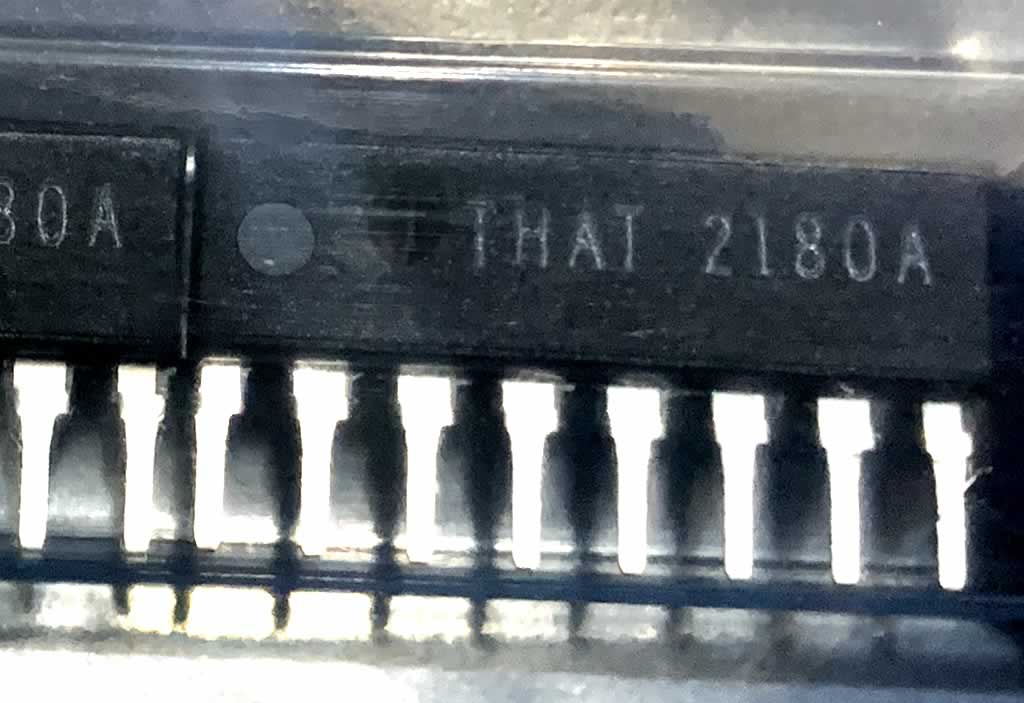
As of today, 1st October 2026, the opportunity to buy the THAT Corp 2180 and 2181 VCAs, along with a few other fantastic chips, comes to an end. Last orders at the bar directly from THAT Corp. It’s genuinely a bit of a bittersweet moment for me because I absolutely love these devices. Chances are that some of the major distributers bought extra bulk for their own restocking. If that’s the case, the window is not yet closed, it’s quite possible they have bought some large stockpiles that will fuel the market for some time to come but the future is very much uncertain and unpredictable.
Beyond the fact that they’re found everywhere from high-end professional equipment to vintage and boutique audio gear, they’ve always represented something much bigger to me: accessibility. These chips lowered the barrier to entry for genuinely great audio. For those of us who didn’t have thousands to spend on expensive equipment, they offered a way in. With a bit of research, a soldering iron, and some patience, it was possible to take affordable gear and elevate it into something capable of professional results.
In many ways, I think they helped democratise music hardware. Skill, curiosity, and a willingness to learn could often matter more than the size of your bank account, and I think that’s something worth celebrating.
Anyone who has followed my earlier posts will know I’ve used these chips extensively over the years. Several DBX 163x units have benefited from them, along with multiple DBX 263x units more recently. I’ve also had the DBX 166 upgraded and even the often-maligned Alesis 3630. Despite its reputation, I’ve always had a soft spot for the 3630. People often point out that these units remain budget compressors even after modification, but they’re certainly quieter, and their wonderfully aggressive, over-the-top pumping can be enormous fun. Sometimes character matters just as much as perfection.
The impact becomes even more apparent in projects such as the Gyraf GSSL. With careful sourcing and a bit of patience, I’ve managed to find donor cases and components to get a build underway for around £100, with £52 of that being the four THAT 2180 VCAs at its heart. The result is something that captures much of the spirit of an SSL G-Comp for a fraction of the price, while providing a fantastic learning experience along the way.
Over the years I’ve come across countless other modification opportunities that make use of these chips, often transforming the performance of the equipment they’re installed in. No doubt alternatives will emerge, and some already exist, but I’ve yet to come across anything that combines the specification, track record, and sheer legacy of these remarkable Blackmer-cell powerhouses.
To mark the occasion, I teamed up with a friend and placed one final substantial order. Thankfully, it should keep me stocked for many years of building, repairing, and experimenting. Having already experienced the struggle of sourcing genuine PCM54PK chips, including accidentally buying counterfeits and paying upwards of £60 each for documented genuine parts, I know how difficult component hunting can become once production stops.
I also picked up a healthy supply of other THAT chips, including some 1646s, both for future repairs and for whatever projects may appear on the horizon. With a finite quantity now available and undoubtedly some large industry stockpiling taking place, I suspect the remaining supply will only become harder and more expensive to obtain. That’s a shame, because it raises the barrier to entry for the next generation of musicians, builders and enthusiasts.
Still, rather than focus on what’s ending, I’d rather focus on what these chips made possible. They helped countless engineers, hobbyists, DIY builders, and musicians achieve results that might otherwise have been out of reach. They’ve certainly enabled a huge amount of learning, experimentation, and enjoyment in my own workshop.
So, a huge thank you to THAT Corp. These little chips have brought me years of enjoyment, taught me a great deal, and helped make high-quality audio more accessible than ever. That’s a legacy worth celebrating.